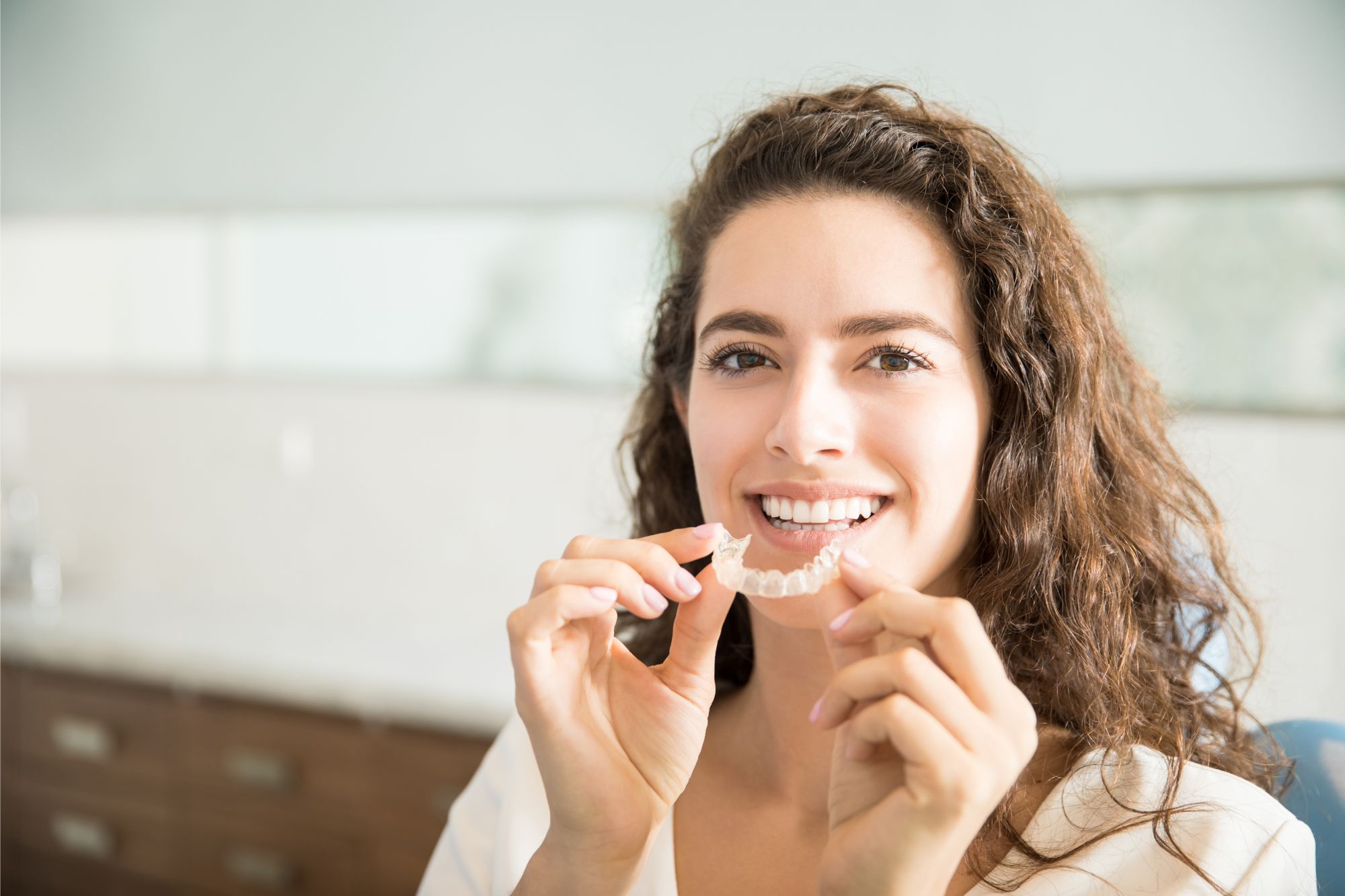
What Are Clear Aligners for Adults?
Clear aligners are transparent, removable trays that gradually straighten adult teeth, usually over 6 to 18 months. Invisalign is the most doctor-recommended system, and adults now make up roughly one-third of orthodontic patients.
Before you commit, a few things shape your experience: the type of provider guiding your treatment, whether your smile is a good match for aligners, and what daily life with the trays actually looks like. This guide walks through each one.
Clear aligners for adults are custom-fit, transparent thermoplastic trays worn over the teeth to move them into a straighter position. They are made from smooth, medical-grade materials, and each tray is designed to apply gentle pressure to specific teeth. Adults wear each set for 20 to 22 hours a day, swapping to the next tray every one to two weeks.
A few key differences separate aligners from traditional braces:
- Nearly invisible when worn
- Removable for meals, brushing, and flossing
- No brackets, wires, or food restrictions
- Fewer emergency visits for broken hardware
For adults, the discretion matters. You can present at work, attend a wedding, or sit through a video call without drawing attention to your treatment.
How Do Clear Aligners Work?
The process follows a predictable path, whether you choose Invisalign clear aligner therapy or another provider-supervised brand.
- Initial consultation and 3D scan. Your provider examines your teeth, takes low-radiation digital X-rays, and captures a digital scan. You will often see a preview of your projected results.
- Custom aligner series. A lab fabricates your trays, often 12 to 40 or more depending on how much movement is needed.
- Progressive wear. You wear each tray for one to two weeks, then move to the next in the series.
- Progress check-ins. Brief visits every 6 to 10 weeks let your provider confirm your teeth are tracking as planned.
- Refinements if needed. Some cases benefit from a short final round of trays to fine-tune the result.
For more complex movements, your provider may bond small tooth-colored attachments to certain teeth. These give the aligners better grip. Interproximal reduction, which is a very light polishing between teeth, can also create space for crowded teeth to shift.
Benefits of Clear Aligners for Adults
Clear aligners for adults offer six practical advantages that go well beyond looks:
- Nearly invisible. Ideal for meetings, presentations, weddings, and photos.
- Removable. Take them out to eat, drink coffee, brush, and floss like normal.
- More comfortable than metal brackets. No poking wires, fewer mouth sores.
- Fewer office visits. Check-ins every 6 to 10 weeks fit better into a busy schedule.
- No food restrictions. Popcorn, apples, and nuts stay on the menu since trays come out for meals.
- Easier hygiene. Brushing and flossing do not require special tools or extra time.
For adults who wore braces as teens and saw some shifting later, aligners often feel like a noticeable improvement over what they remember.
The Downsides and Limitations of Clear Aligners
Aligners are not the right fit for every smile, and being honest about the trade-offs matters. Clear aligners for adults come with five main limitations to weigh:
- Compliance is everything. Results depend on wearing your trays 20 to 22 hours daily. Skip too much, and progress stalls.
- Not built for every case. Severe bite issues, large rotations, or significant jaw discrepancies often need traditional braces or a combined approach.
- Possible temporary lisp. Many adults notice a slight speech change during the first week or two. It usually fades quickly.
- Attachments can be visible. Those small tooth-colored bumps help move teeth, but they show up close and need careful cleaning.
- Refinements may add time. If teeth do not track perfectly, an extra round of trays can extend treatment by a few months.
If you are weighing aligners against metal brackets, here is how clear aligners compare to traditional braces so you can see which suits your case. A candid conversation with an experienced provider will help you decide whether aligners fit your goals and lifestyle.
Am I a Good Candidate? Adult Candidacy by Age and Case Type
Most adults with healthy teeth and gums make excellent candidates for clear aligners. You are likely a strong fit if you have:
- Mild to moderate crowding
- Spacing or gaps between teeth
- Minor bite issues such as overbite, underbite, or crossbite
- Shifting after previous orthodontic treatment
- Healthy gums and no untreated decay
Is 35 too old for Invisalign? Not at all. Adults in their 40s, 50s, and 60s are successfully treated every day. Age is not the barrier, oral health is. The process that moves teeth through bone works the same whether you are 25 or 65.
A few special considerations for adults:
- Existing dental work. Crowns, bridges, veneers, and dental implants change the treatment plan. Implants do not move, so they need to be worked around.
- Gum health. Active gum disease must be treated before starting aligners.
- Bone density. Your provider will confirm your supporting bone is healthy enough for tooth movement.
Aligners may not be the right fit for severe bite issues, cases requiring significant vertical movement, or anyone whose schedule makes 20-plus hours of daily wear unrealistic.
What to Expect During Treatment: A Timeline
Here is what the clear aligners for adults experience looks like month by month:
- Week 1 to 2: Adjustment period. Mild pressure and a possible short-lived lisp as your mouth adapts.
- Month 1 to 3: Early visible changes. The routine of swapping trays and cleaning them becomes second nature.
- Month 3 to 9: The bulk of tooth movement happens. Your provider may add attachments or discuss mid-treatment refinements.
- Final months: Fine-tuning and preparing for retention.
A few care tips make treatment smoother:
- Rinse trays with cool water and brush them gently with a soft toothbrush.
- Use chewies, which are small foam cylinders, to seat trays fully after inserting.
- Keep your case with you at all times. Napkins and pockets lose aligners fast.
- Contact your provider right away if you lose or damage a tray.
Life After Treatment: Retainers and Long-Term Results
Retainers are a lifetime commitment. Without them, teeth naturally drift back toward their original positions over time.
Common retainer options include:
- Clear retainers worn full-time at first, then nightly indefinitely
- Bonded, or permanent, wire retainers placed behind the front teeth
Clear retainers wear down with use and need replacing every few years to keep protecting your result.
How to Choose the Right Provider: In-Office vs At-Home
The provider you choose has as much impact on your results as the brand of aligner you wear.
In-office care offers the highest level of oversight: a full exam, low-radiation digital X-rays, real-time adjustments, and the ability to handle unexpected changes. Board-certified orthodontists, American Association of Orthodontists members, and experienced general dentists trained in aligner therapy can plan complex cases and refine treatment as your teeth move.
At-home, direct-to-consumer options skip the in-person exam entirely. That keeps oversight low and removes the safety net. Watch for these red flags:
- No X-rays or in-person exam
- No clear refund policy
- No named provider overseeing your case
Skipping the in-person exam and hands-on oversight can hide problems like gum disease, root issues, or bite imbalances, which can lead to lasting damage. For most adults, that trade-off is not worth it.
Why do not some dentists recommend Invisalign? It is less about the product and more about case selection. Some general dentists prefer to refer complex cases to a specialist, and some feel braces give more predictable results for certain bite issues. A provider who is honest about when aligners are and are not the right tool is one worth trusting.
Frequently Asked Questions About Clear Aligners for Adults
Is 35 too old for Invisalign?
No. Adults of any age can successfully use Invisalign clear aligner therapy as long as their teeth and gums are healthy. Patients in their 40s, 50s, and 60s are treated every day with excellent results.
Why do not dentists recommend Invisalign?
Most dentists do recommend it, but some prefer to refer complex cases to a specialist. Traditional braces may still offer better predictability for severe crowding, significant rotations, or major bite correction.
What are the downsides of clear aligners?
The biggest drawbacks are the compliance requirement of 20 to 22 hours daily, limits with severe cases, and a possible temporary lisp. Refinements may extend treatment, and skipping wear time can stall progress.
Do clear aligners hurt?
Most adults feel mild pressure or tenderness for a day or two after starting a new tray. It is a sign the aligners are working. Over-the-counter pain relievers help if needed.
Can I drink coffee with aligners in?
Only water is safe to drink with aligners in place. Coffee, tea, wine, and soda can stain the trays and your teeth, and hot drinks can warp the plastic.
Will I need a retainer forever?
Yes. Teeth naturally try to shift over time, so nightly retainer wear is a lifetime commitment. It is the best way to keep your teeth in their new position.
If you are ready to explore whether clear aligners are the right fit for your smile, Dr. Beverly Moon and the team at Moon Signature Dentistry offer an initial consultation to review your options.