Standing in the whitening aisle is its own kind of decision fatigue. Strips, pens, LED trays, charcoal pastes, all promising a brighter smile for a fraction of what a dentist charges. Then a friend tells you the drugstore stuff never worked and you should just go get it done properly.
Both of those can be true at once. The honest answer depends on what is actually staining your teeth, and most people never get told that part.

There Are Three Options, Not Two
Almost every article on this topic sets it up as dentist versus drugstore. That skips the option a lot of people are best suited to.
- Over-the-counter kits. Strips, pens, rinses, LED gadgets. Low peroxide concentration, one-size-fits-all fit, no supervision. Bought off a shelf.
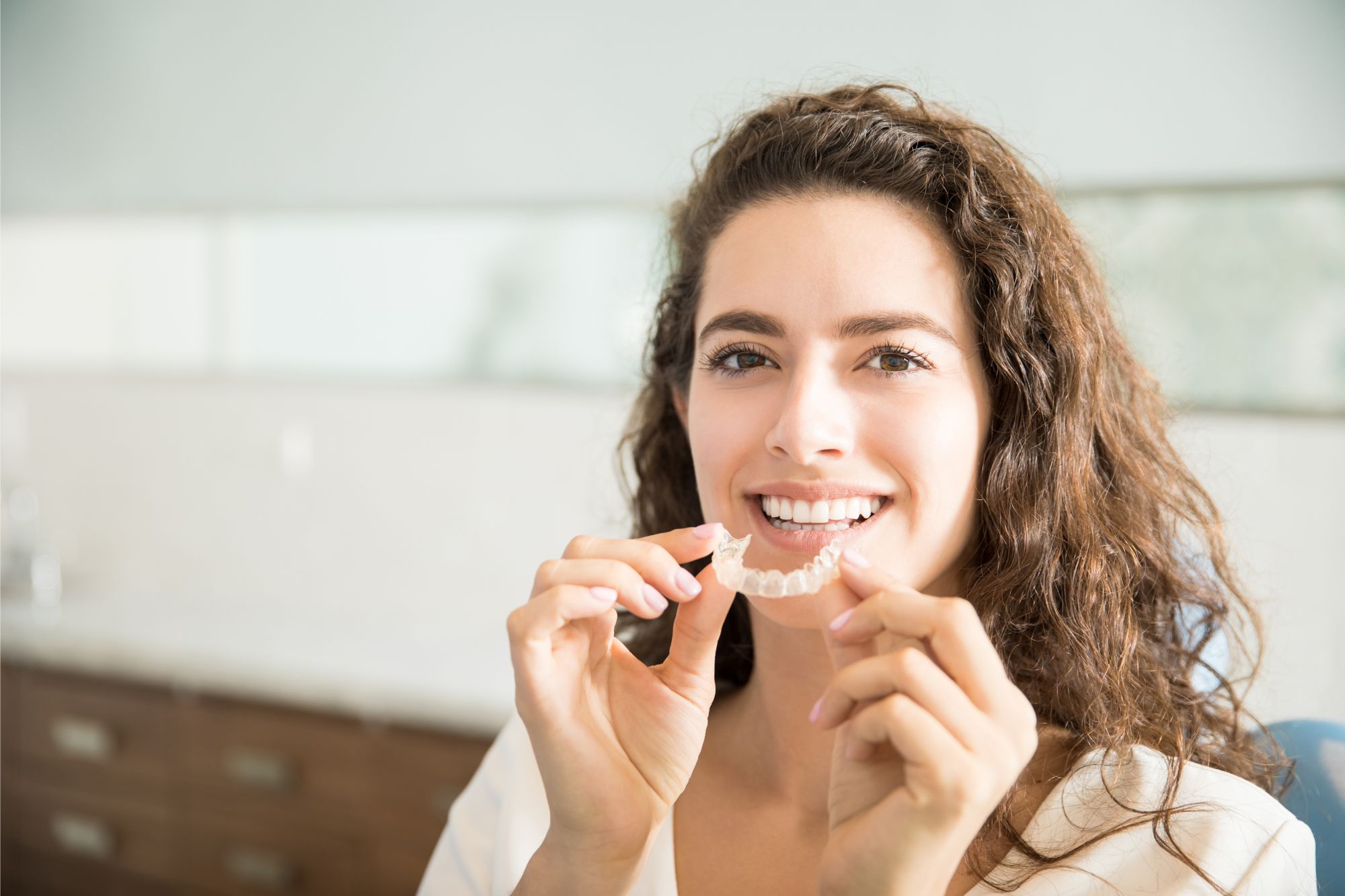
- Dentist-supplied take-home trays. Custom trays moulded to your teeth, professional-grade gel, used at home on your own schedule. A dentist checks your teeth first and tells you how to use it.
- In-office whitening. Highest concentration gel, applied and monitored in the chair, biggest change in the shortest time.
Dr. Moon offers both take-home trays and in-office treatment at our Olathe office. Which one she suggests depends on your teeth, not on which one takes longer to deliver.
What Is Actually Different Between Them
Three things, and only three.
The gel
All whitening works the same way chemically. Hydrogen peroxide or carbamide peroxide breaks apart the molecules causing discolouration. What changes is concentration. Drugstore products are formulated to be safe for anyone to use unsupervised, which necessarily means weaker. Professional gel is stronger because someone qualified is deciding whether your teeth can handle it.
The fit
This is the one people underestimate. A generic strip or boil-and-bite tray does not follow the contours of your teeth. Gel pools in some places and never reaches others. That is where patchy results come from, and it is the single most common reason people give up on at-home whitening and assume it does not work.
A custom tray takes an impression of your actual teeth. The gel sits where it is supposed to sit.
The exam that comes first
Whitening a tooth with an untreated cavity, or gums that are inflamed, is a bad idea. So is whitening if the discolouration is coming from inside the tooth rather than the surface, because surface treatment will not touch it. Nobody at the drugstore checks. Dr. Moon does, before anything gets applied.
Surface Stains and Deep Stains Are Different Problems
This is the part that decides whether whitening will work for you at all.
Extrinsic stains sit on the outside of the enamel. Coffee, tea, red wine, tobacco, curry. These respond well to whitening, including at-home options.
Intrinsic stains come from inside the tooth. Ageing, trauma, certain medications taken during tooth development. These respond poorly or not at all to surface whitening, no matter whose gel you use. If your discolouration is intrinsic, the honest answer is not stronger whitening. It is porcelain veneers or bonding, and a good dentist will tell you that rather than sell you a whitening package that will disappoint you.
Comparing Your Options
| Option | Best For | Fit | Supervision | Timeline |
|---|---|---|---|---|
| Drugstore kits | Mild surface stains, touch-ups | Generic | None | Weeks, results vary |
| Take-home trays from your dentist | Gradual change, sensitive teeth, control over pace | Custom moulded | Exam first, guidance throughout | Days to weeks, at your pace |
| In-office whitening | Fastest change, an event on the calendar | Applied directly | Monitored the whole time | Single appointment |
What Whitening Will Not Fix
Worth knowing before you spend anything.
- Crowns, veneers and fillings do not whiten. Whitening gel works on natural enamel. If you have a crown or a tooth-colored filling on a front tooth, it will stay exactly the shade it is while everything around it gets lighter. That can leave you looking worse than when you started. It is fixable, but the fix is replacing the restoration to match, not more gel.
- Intrinsic discolouration. Covered above. Surface treatment, internal problem.
- Untreated decay or gum disease. Those get sorted first. Always.
If whitening is not the right answer for your teeth, cosmetic dentistry in Olathe has other routes to the same result. You should hear that at the consultation, not after you have paid for something that did not work.
Which One Should You Choose
A drugstore kit makes sense if your teeth are healthy, your stains are mild and recent, and you want a small lift without a dental visit. Manage your expectations on evenness and be honest with yourself about whether you will keep using it.
Take-home trays make sense if you want a real change but you want to control the pace, you have had sensitivity trouble with whitening before, or your schedule does not accommodate a longer appointment. You get professional-grade gel in a tray built for your mouth.
In-office makes sense if you want the biggest change in one sitting, you have an event coming up, or previous attempts have not worked and you want someone watching what happens.
The step everyone skips is the one before all three. Get a cleaning first. Plaque and tartar sit between the gel and your enamel. Whitening over them gives you patchy results and then you blame the product.
Frequently Asked Questions
Does teeth whitening damage enamel?
Professional whitening performed or supervised by a dentist does not damage enamel. The risk with unsupervised over-the-counter products is overuse, since nobody is monitoring how often you apply them or whether your teeth were suitable in the first place. Sensitivity during treatment is common and usually temporary.
Why did my whitening strips give patchy results?
Almost always the fit. Generic strips and trays do not follow the contours of your teeth, so gel pools in some spots and misses others entirely. Custom trays made from an impression of your teeth solve this, which is the main reason dentist-supplied take-home whitening outperforms the drugstore version despite both being used at home.
Will whitening work on my crowns or veneers?
No. Whitening only changes natural enamel. Crowns, veneers and tooth-colored fillings stay the shade they were made. If you have restorations on visible teeth, tell your dentist before whitening, because the plan may need to include replacing them to match your new shade.
Do I need a cleaning before whitening?
Yes. Plaque and tartar block the gel from reaching your enamel evenly, which produces the patchy result people blame on the product. A cleaning also gives your dentist a chance to spot decay or gum problems that should be treated before any bleaching agent goes near your teeth.
How do I know if whitening will work for my teeth?
It depends on whether your discolouration is on the surface or inside the tooth. Surface stains from coffee, tea, wine or tobacco respond well. Stains from ageing, trauma or medication taken during tooth development usually do not, and veneers or bonding are the better route. An exam is the only way to tell which you have.
Talk It Through With Dr. Moon
If you are not sure which option fits your teeth, that is exactly what a consultation is for. Dr. Moon will look at what is actually causing the discolouration, tell you honestly whether whitening will get you where you want to go, and lay out the options. Here is what to expect at your visit.
Call 913-361-7088 or book an appointment with our Olathe office.